
That Ringing Phone? It's Your Business Bleeding Cash.
That Ringing Phone? It's Your Business Bleeding Cash.

You’re grinding, right? Working your tail off, trying to keep your local business afloat, maybe even grow it. But I’ve got to tell you something that might sting a little: that ringing phone, the one that goes to voicemail, or worse, just rings and rings? That’s not just a missed call. That’s money. Your money. Walking right out the door. Studies? They’re screaming six-figure losses annually for service businesses that can’t catch those inbound calls. Think about it: any customer trying to reach you, who doesn’t get an answer, or a call back within a reasonable time, or whose message just sits in a voicemail box gathering dust. Each one of those is a lost booking. A lost sale. A customer who might never come back. It drives me crazy when I see hardworking owners like you leaving so much cash on the table. This isn't just about a phone system; it's about your bottom line, your reputation, and your sanity. We’re going to dig into why this happens, what it’s truly costing you, and some real-world fixes, from simple staff tweaks to smart automation. Here at the Voiseai blog, we want to help you plug those communication holes and, where it makes sense, show you how automated voice-AI can be a profit-boosting tool, not just some fancy tech. Keep reading. We’ll show you how to calculate your losses, map out how voice AI can help, and compare options so you can stop the bleeding and start recovering real revenue.
The Hard Truth: How Much Cash Are You Really Burning?

A missed call isn't just an annoyance. It’s burnt money. Straight up. It’s direct lost revenue, sure, but it’s also the future business that never materializes, the repeat customer you never got, and the marketing dollars you spent that just went poof because you couldn't answer the phone. You want to quantify the pain? Here’s a simple formula: missed calls multiplied by your callback conversion rate, then multiplied by your average sale value. That’s a start. But there’s a ripple effect, too: a bad first impression means reduced lifetime value, maybe even a nasty review. Industry reports? They consistently put average annual losses in the low six figures for many local service firms. That means even a tiny bump in your answer rate can make a huge difference to your top line. Below, I’ve laid out some concise stats to show you the scale of this problem and how to apply these figures to your own business.
These numbers aren't pretty, but they clarify the scale of missed-call losses for local firms.
What We're MeasuringWhat it Means for YouTypical HitAnnual cost from missed callsEstimated lost revenue per small-to-medium business$100,000 - $150,000% of callers who don't call backShare of missed callers who just give up70% - 85%Average conversion from callbackPercent of callers who actually convert when you finally reach them10–20%
See? Shaving even a small percentage off those missed calls can deliver measurable revenue gains. Now, use that formula I gave you to calculate what you could be recovering.
Beyond Today's Sale: How Ghosting Callers Kills Your Future.
Unanswered calls don't just bite into today's sales. They eat away at your future. Lost repeat business. No referrals. Together, these trends slow your business’s growth trajectory to a crawl. Imagine a local contractor, for instance. They lose five potential leads a week. Each job averages $800. Their callback conversion? A measly 20%. That’s roughly $41,600 in annual revenue gone. Poof. And that’s not even counting the lifetime value of recurring clients. This small example shows how those missed first contacts compound over 12 months, limiting your ability to hire, killing your advertising ROI, and capping your expansion capacity. When you see the math, it’s clear: your call-answering strategy belongs in your growth planning, not just in your daily operations.
Crunching the Numbers: What's Your Missed Call Tab?
Several headline metrics help owners benchmark their risk and set priorities: those annual loss estimates, the high percentage of callers who never return, and the dismal conversion rates when outreach is delayed. To make these numbers actionable for *your* business, map them to your average sale, your weekly lead volume, and your appointment cadence. That’ll give you a tailored loss estimate. Industries like home services, medical practices, and law offices? They show how a single missed inquiry can equal hundreds, even thousands, in lost revenue. Use these statistics to set meaningful KPIs for yourself. A target answer rate, for example, or an acceptable time-to-callback. Get specific.
Why Are You Missing Calls? Let's Get Real About the Root Causes.
Missed calls aren't some mystery. They stem from predictable operational and technical headaches. Find the root issues, and you can apply targeted fixes that restore revenue fast. Staffing shortages. After-hours demand. Peak-time overloads. Old, clunky phone systems. Weak call-routing policies. Each one creates a leak point where callers just disappear. Fixing them usually means a mix of people, process, and tech improvements so your coverage is consistent and repeatable. The short lists below break down common root causes and the immediate consequences for your missed-call rates.
Not enough hands on deck, or single-person shifts: When one person is trying to do everything, peak times become a nightmare. Calls get dropped. Or ignored.
After-hours and weekend gaps: Your limited hours mean you’re missing buyer windows. Many consumers search evenings and weekends. Without 24/7 coverage, those leads are just gone.
Your old phone system is holding you back: Systems without smart routing, CRM logging, or caller ID? They fail to prioritize and preserve inbound inquiries.
These root causes point to practical mitigations: scheduling tweaks, overflow handling, and targeted tech upgrades that close the most damaging gaps. It’s not rocket science, but it takes action.
Too Busy, Too Late: Staffing Headaches and After-Hours Losses.
Small teams, constantly splitting their attention between in-person work and phone duties, often deprioritize calls. It’s just how it goes. Peak windows and even brief absences become missed leads. After-hours demand? That’s particularly costly because so many customers search outside standard business hours. Without coverage, those opportunities vanish into thin air. Short-term fixes? Think staggered shifts, guaranteed callback SLAs, and overflow arrangements. These can reduce missed-call rates quickly while you plan longer-term automation. The right mix depends on your specific call patterns and how much those off-hour leads are worth to you.
Your Old Phone System is Robbing You Blind.
Legacy phone systems. Workflows that are voicemail-only. No CRM tie-in. These things create friction for follow-up and prioritization. Without automated routing, caller intent detection, or call logging, you’re missing the chance to triage high-value calls. You also lack the data to actually improve anything. Moving to VoIP with call tracking, or adding automated call-handling features, reduces misses and builds a record for conversion analysis. These tech fixes are often low-cost, especially when you compare them to the revenue they help you recover. It’s a no-brainer.
A Lifeline for Your Business: How Smart AI Can Save Your Sanity (and Your Wallet).
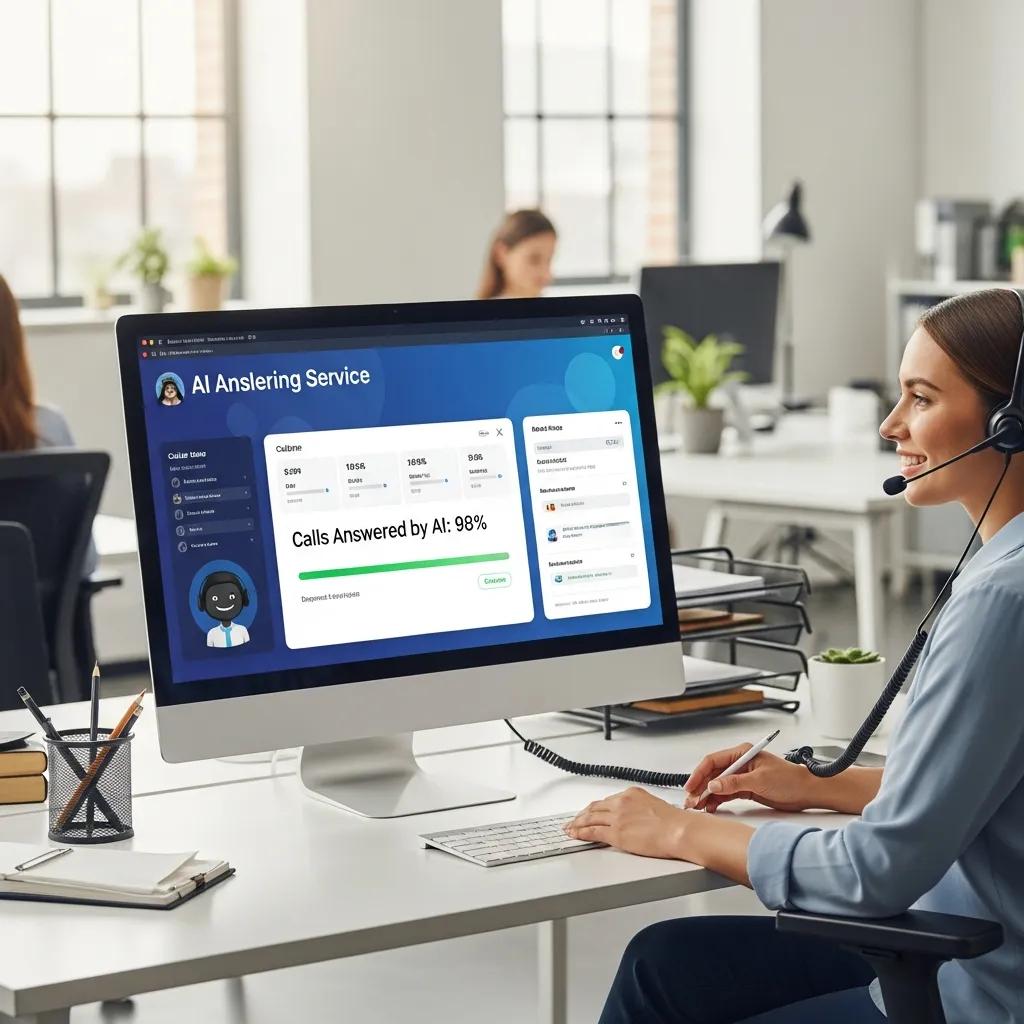
Voice-AI answering services? They’re like having an always-on, super-efficient employee who never takes a break. They combine natural-language understanding with your specific business rules to answer calls, qualify leads, and even book appointments. This cuts down on missed calls and frees up your human staff for the really important, higher-value work. The core benefits are clear: 24/7 availability, quicker resolutions, and consistent caller experiences that protect your reputation and boost conversions. Below, I’ve put together a practical mapping of voice-AI features to real business outcomes so you can see exactly how this automation delivers measurable value. It’s not just technology; it’s a tool for sanity and profit.
FeatureHow it Works (for You)Your Business Benefit24/7 call answeringAI handles inbound calls, day or night, holidays included.No more lost after-hours leads. Ever.Smart lead qualificationNatural Language Processing (NLP) figures out what the caller wants and how important they are.Higher-quality handoffs to your team, fewer wasted callbacks.Automated appointment schedulingBooks slots and updates your calendars automatically.More booked appointments, fewer no-shows, less manual work.
These capabilities translate directly into recoverable revenue and better operational efficiency. That’s why so many local businesses are looking at voice-AI as a smart complement to their staffing adjustments. For example, Voiseai offers voice-AI solutions that deliver 24/7 call answering, intelligent lead qualification, automated appointment booking, and personalized caller handling. I mention this to show you how modern providers are closing those visibility and communication gaps, letting owners like you focus on actually running your business, not just answering the phone.
What Can This 'Voice AI' Thing Actually Do For You?
Voice-AI offerings commonly include NLP-based intent detection, smart routing rules, calendar integration for bookings, and CRM logging to keep all that lead context. It all combines into an automated triage system. What does that mean for you? Calls get answered consistently. High-value prospects get prioritized. Appointment slots fill up without you lifting a finger. Calendar and CRM integration keep data flowing smoothly so your human teams can follow up without missing a beat when escalation is needed. The net result: higher answer rates, fewer lost leads, and clearer revenue attribution for every inbound call. It’s about working smarter, not harder.
Happy Customers, More Leads: The AI Advantage.
AI actually raises caller satisfaction. How? By providing fast, consistent responses and cutting down on those frustrating dead-end voicemails. This directly reduces negative feedback tied to poor phone service. Lead generation? It improves because qualified calls are identified and booked immediately, leading to much better conversion rates than delayed human callbacks. A typical ROI snapshot shows lower staffing cost per handled call and more booked appointments. This makes AI a measurable lever for growth, especially when you pair it with clear escalation paths to your human staff. It’s a win-win.
Stop the Bleeding: Real Solutions for Your Missed Call Problem.
Effective strategies mix short-term operational fixes with mid-term tech upgrades and long-term automation. The goal? To make sure your call coverage scales with your needs. Immediate moves? Think callback SLAs, SMS follow-ups, and quick schedule tweaks. Mid-term steps? VoIP adoption and call tracking. Long-term solutions? That’s where voice-AI and virtual receptionists come in for continuous, seamless coverage. Below is a practical comparison to help you choose the best path based on cost, benefits, and trade-offs. No fluff, just facts.
Your own in-house receptionist: Gives that personal human touch, absolutely. But it can be expensive, and it doesn’t scale easily when things get busy.
Outsourced human reception: Extends your hours with predictable support. But you might see some quality variability, and those recurring fees add up.
VoIP + software: Lowers your telephony costs, adds routing and tracking, and ties into your CRM. A solid step up.
Voice-AI answering services: Provides scalable 24/7 automation, qualification, and booking at a much lower marginal cost. This is where the future is.
Solution TypeTypical Cost/OverheadProsConsIn-house receptionistModerate to highHigh human judgment and personalization.Staffing, training, and scheduling headaches.Outsourced human receptionRecurring monthly feesExtended hours with a human touch.Potential quality variance and ongoing cost.VoIP + softwareLow to moderateRouting, tracking, and integrations.Still needs humans for complex calls.Voice-AI solutionsScales with usage24/7 coverage, qualification, and booking.Requires setup, rules, and escalation design.
This comparison highlights the trade-offs. Use it to prioritize the fastest, highest-impact fixes that will recover your lost revenue and stabilize your growth. You deserve to stop the grind.
Your Phone, Finally Under Control: How Automation Works.
Automated answering triages incoming calls. It completes routine bookings. It escalates complex issues to your human team. This creates a continuous funnel that captures leads instead of letting them vanish into voicemail. A typical flow looks like this: caller intent detected, AI qualifies and offers booking, calendar updated and call logged in CRM, human handoff when needed. This approach preserves the human touch for high-value interactions while ensuring baseline coverage for all inbound demand. Implementing clear escalation rules and quality checks ensures the AI supports, not replaces, effective customer service. It’s about making your life easier, not harder.
Simple Steps to Stop the Missed Call Madness.
Here’s a concise checklist to align your process, technology, and measurement. This will drive sustainable improvement in your answer rates and lead capture. Track your call metrics. Define callback SLAs. Integrate your telephony with your CRM. Review call transcripts to refine scripts and routing. Regularly test your after-hours coverage. Analyze missed-call patterns by time and source to prioritize your interventions. These practices create a feedback loop that improves both your operational performance and your customer experience over time. It’s about continuous improvement, not a one-time fix.
Burning Questions? I've Got Answers.
Ghosting Your Customers: The Long-Term Damage.
Missed calls can absolutely erode customer trust over time. When prospects or clients feel ignored, they’re less likely to return. They’re definitely less likely to recommend your business. And let me tell you, negative impressions are incredibly hard to undo. Missed follow-ups also mean lost repeat business. Putting a reliable call-management system in place prevents those long-term losses and helps protect your hard-earned reputation. Don’t let a ringing phone ruin your future.
Are Your Fixes Working? How to Measure Success.
Track key performance indicators. Things like answer rate, callback conversion, average time-to-callback, and customer satisfaction scores. Regularly review your missed-call counts and the revenue tied to phone leads to see the real financial impact. Customer surveys and call-quality audits add qualitative insight that guides improvements. You can’t fix what you don’t measure.
Listen Up: Why Customer Feedback is Gold.
Customer feedback is a direct source of truth about your phone experience. Surveys and follow-up calls highlight pain points. Long hold times? Confusing responses? You can address these through training, script updates, or routing changes. Using feedback to iterate keeps your service aligned with customer expectations. It’s like getting free consulting.
Who Gets Hit Hardest by Missed Calls?
Oh, absolutely. Service-focused industries — home services, healthcare, legal, and others that rely heavily on phone inquiries — often feel the impact most. Why? Because a single missed call can mean a lost appointment or a lost client. Highly competitive markets also suffer more when responsiveness becomes a key differentiator. If your competitors are answering, and you’re not, you’re losing.
Busting the Myths About Automated Answering.
One myth I hear all the time is that automation kills the personal touch. Not true. Modern systems are designed to escalate complex issues to humans and keep interactions personable. Another misconception is that automation only benefits large companies. Wrong again. Small businesses can use it to capture more leads without inflating staffing costs. It’s about smart leverage.
Making the Switch: Your AI Transition Plan.
Start with a clear goal. What do you want to achieve? Then, pick a solution that integrates with your CRM and calendar. Train your staff on the new workflows. Define clear escalation paths so handoffs are seamless. Monitor performance closely during rollout. And iterate on rules and scripts based on real call data and feedback. It’s a process, but it’s worth it.
Missed calls cost more than many owners expect — in immediate revenue and in longer-term growth. By combining quick operational fixes with the right technology and, when appropriate, voice-AI automation, local businesses can reclaim lost leads and protect their reputation. Understanding the financial impact turns missed-call management from an afterthought into a revenue play. Ready to improve your call handling? Explore solutions that fit your volume and budget, and start recovering the revenue you’re leaving on the line. Stop the bleeding. Start profiting.
Author Bio

Calvin Shropshire
Founder/Owner at Voiseai
Calvin helps local business owners stop the operational bleeding and start capturing the revenue they’re currently missing. With a focus on practical automation and real-world ROI, he writes to bridge the gap between complex technology and the daily grind of running a service business. When he's not optimizing workflows at Voiseai, he’s helping owners reclaim their time and their sanity.
About Voiseai
Voiseai isn't just about answering phones; it's about business continuity. We build voice-AI solutions designed specifically for local teams that can't afford to miss a single lead. Our mission is to ensure every customer inquiry gets the immediate, professional response it deserves—24/7—so you never leave money on the table again.


