Founder Flex, Without the Theater: What Sage Oliver and Athena Reveal About Better Business Systems
The founder flex nobody posts about
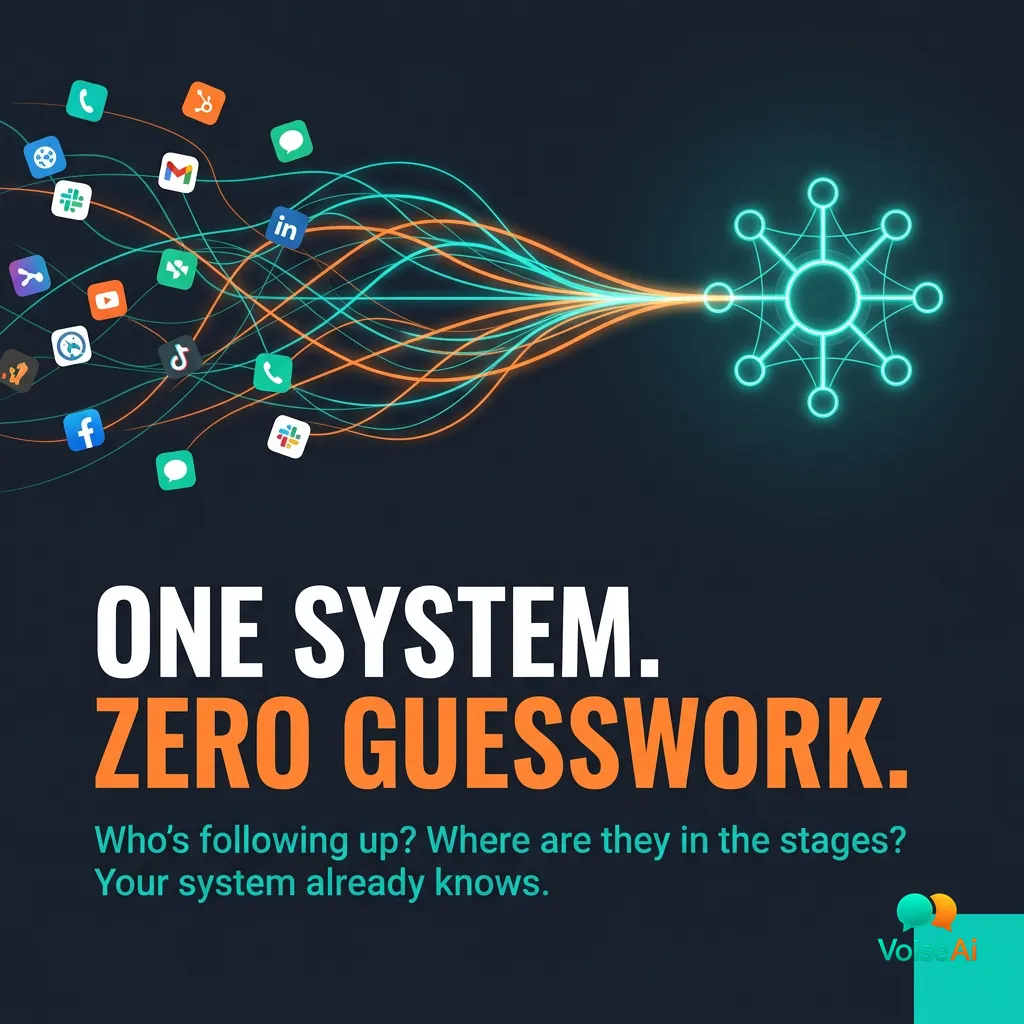
There is a version of founder life that looks great in a highlight reel: the packed calendar, the big launch, the new tool, the late-night hustle. Then there is the version that actually determines whether the business gets healthier: knowing what is happening with every lead, every follow-up, every handoff, and every next step—without asking three people and opening five tabs.
That is the flex. Not more software. Not more noise. A business that can move with precision because its systems are working together.
Behind the scenes, Sage Oliver and Athena give us a useful lens on that shift. Think of them as two names for a bigger operating idea: technology should take friction out of the work your team already does. The goal is not to replace good judgment or bolt on another shiny dashboard. It is to make the whole operation easier to see, easier to run, and less expensive to keep moving.
Founder truth: complexity has a carrying cost
Most companies do not wake up one morning with a perfectly planned maze of apps. The stack grows one reasonable decision at a time. A tool handles calls. Another captures forms. A separate inbox holds messages. A spreadsheet tracks who needs a follow-up. Someone has a personal system for remembering what the spreadsheet does not.
Each choice may solve a local problem. Together, disconnected tools create a larger one: information gets stranded, ownership gets fuzzy, and the team spends energy reconstructing what should already be clear.
That carries a cost even when it never appears as a line item. Repeated data entry is time not spent serving customers. Unclear ownership invites duplicated effort—or silence. A lead’s stage becomes a debate instead of a fact. And every “Has anyone followed up?” steals attention from work that can actually move the business forward.
What the Sage Oliver and Athena theme can teach
Picture the business as a coordinated digital workforce. Use Sage Oliver and Athena as a lens on the operating discipline that makes that workforce useful: keep the process visible, make handoffs accountable, and reduce needless complexity. The point is not to assign a personality to every task; it is to ensure the right information reaches the right person and the next useful action is clear.
These are not magic buttons. They are a reminder that useful automation starts with a clear operating design. If the process is confusing, automating it can make confusion travel faster. If the process is understandable, connected systems can help the team carry it out consistently.
The founder’s job is not to collect technology. It is to decide what the business needs to know, who needs to act, and how the work should move from one stage to the next.
Optimize what is already working
System optimization is not a demolition project. It begins by looking at what your team already does well and removing the drag around it. Keep the tools and steps that earn their place. Connect the parts that need to share context. Retire duplication where two systems are doing the same job without improving the result.
Start with a simple map:
- Capture: Where does a new inquiry enter, and what information should travel with it?
- Ownership: Who is responsible for the next action, and how can that be visible?
- Progress: What stages describe the real customer journey—not an idealized one?
- Follow-up: What should happen next, and what needs a human decision?
- Feedback: How do outcomes inform the next improvement to the process?
That map exposes the gaps worth fixing before anyone adds another subscription or automation.
Three questions your systems should answer
A well-designed operation should make three everyday questions easy to answer:
- Has this person been followed up with? The activity and the next step should be visible, not trapped in someone’s memory.
- Who is working with this person? Ownership should be clear enough to prevent both dropped handoffs and duplicate outreach.
- Where are they in the stages? A shared, understandable view should show the current position and what moves the conversation forward.
When those answers are hard to find, the answer is rarely “buy one more tool.” First ask whether the existing systems can share the information, whether the stages reflect how the business actually works, and whether responsibilities are explicit.
Less tool sprawl, more useful connection
Consolidation is not a contest to force every task into one box. It is a practical test: can the team get the context it needs without bouncing between disconnected places? Can a new inquiry reach the right owner with the relevant history? Can the next action be prompted without creating another parallel record?
Sometimes the right move is to connect tools. Sometimes it is to simplify a handoff. Sometimes it is to stop paying for overlapping capabilities. The decision should follow the workflow, not the sales pitch.
That is where the Sage Oliver and Athena idea gets real: technology earns its keep when it reduces unnecessary steps and helps people act with better context. The outcome is not “more automation” as a trophy. It is fewer avoidable expenses and less operational drag, while preserving the human moments that deserve attention.
Build around people, not dashboards
A dashboard is only useful if it changes what someone can do. A stage is only useful if the team understands it. An automated message is only useful if it fits the conversation and respects the person receiving it. The founder’s truth is that no interface can compensate for unclear ownership or a broken process.
So make the operating rules plain. Define what counts as a completed follow-up. Agree on who owns the handoff. Keep stages meaningful and manageable. Decide which actions can be handled consistently by automation and which should stay with a person. Then connect the systems around those decisions.
When the foundation is clear, teams spend less time asking for status and more time doing the work that creates value. Leadership gets a more reliable view of operations. And the business can improve its net without assuming the answer is to work longer or add more tools.
The flex is a business that makes sense
Founder flex is not pretending every process is perfect. It is being honest about what is messy, then improving the system instead of blaming the people trying to work inside it. It is choosing coordination over clutter, clarity over guesswork, and practical optimization over another layer of complexity.
Sage Oliver and Athena are the behind-the-scenes reminder: let technology support a business that already knows what it is trying to do. Fine-tune the flow. Make ownership visible. Give every lead a clear next step. Connect the tools that should communicate—and question the ones that do not improve the outcome.
That is how a digital workforce becomes more than a headline. It becomes a calmer, sharper way to run the business.
Ready to see what your systems could do better?
Call 423-600-5835 for a live AI demo.
Get your free Marketing Intelligence Engine grade at voiseai.com.
Book a strategy call at voiseai.com.


